
Heat pump · Outdoor unit · Rust
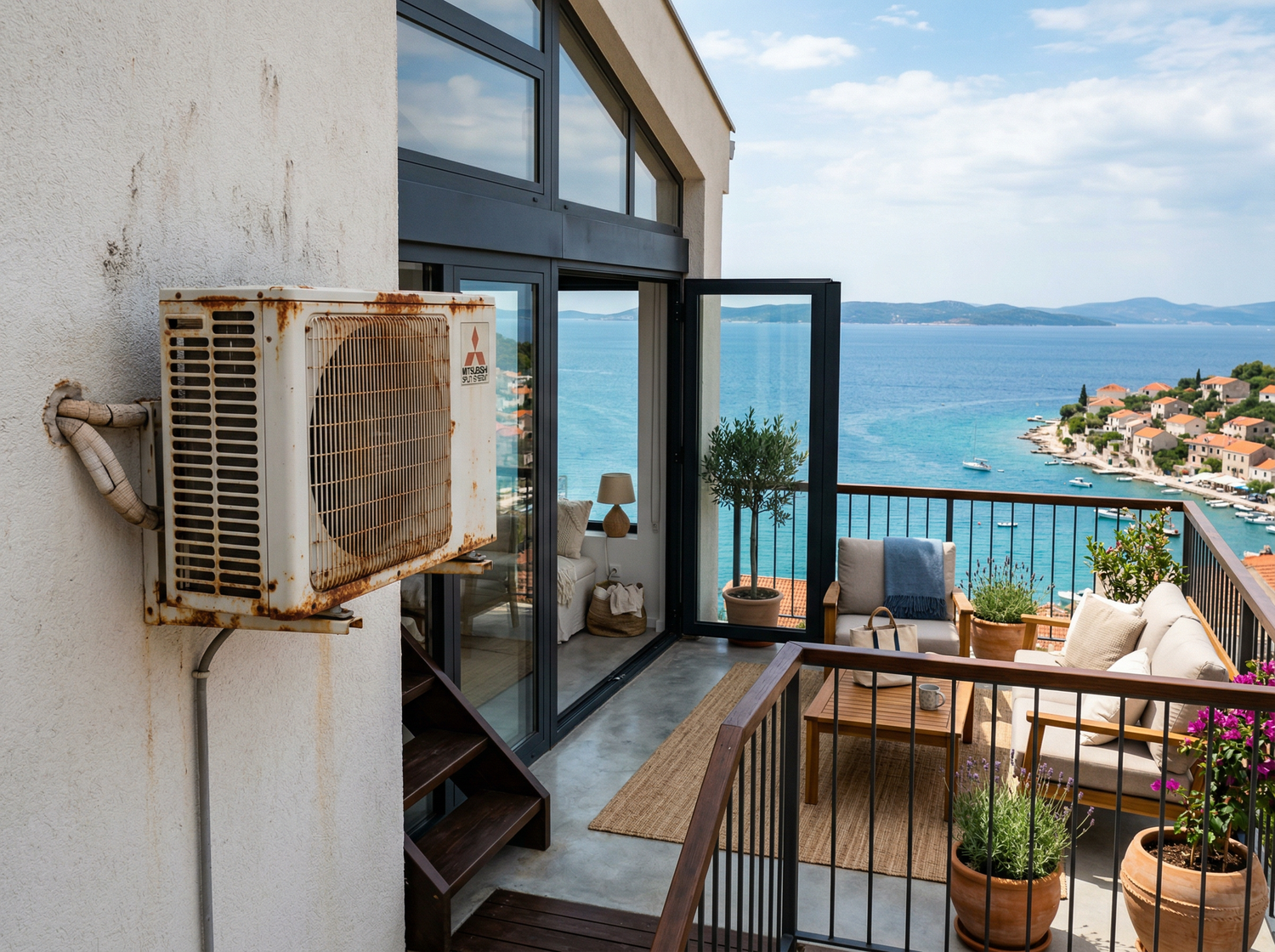
If you live near the sea, your heat pump operates in more aggressive conditions than an installation located farther inland. The point is not to create alarm, but to understand something simple: salt air, humidity and wind really do change the environment in which the outdoor unit works.
Salt carried by the air settles on surfaces, retains moisture and creates conditions that are more favourable to corrosion. That is why, in coastal areas, it makes sense to think more carefully about maintenance, protection and the overall quality of the installation point.

This applies to many heat pumps installed in residential and hospitality settings, such as Daikin Altherma, Mitsubishi Electric Ecodan, Panasonic Aquarea, Vaillant aroTHERM plus, Vaillant aroTHERM pure, LG THERMA V, Samsung EHS and many others.
In this article, we look at why salt air can accelerate heat pump wear, what really changes near the sea, and why a Box Air Klima technical cover can be a practical solution to better shield the outdoor unit, protect it from the elements and integrate it more cleanly into the space, without compromising ventilation or maintenance access.
1. Why the sea changes heat pump operating conditions
Coastal areas are among the most delicate environments for any outdoor machine. This does not only apply to heat pumps: it also affects HVAC systems, window and door frames, light metal structures, vehicles and exposed metal components in general.
The reason is simple: salt carried by the wind settles on surfaces, retains moisture and creates a much more aggressive environment for metals, finishes, joints and exposed parts.
In this context, talking about corrosion does not mean blaming manufacturers. It means recognising an objective environmental condition that deserves more attention than usual, especially on balconies, in gardens, on terraces, on exposed façades and in homes located close to the coast.
2. What salt air actually does
When people talk about salt air and heat pumps, they usually think straight away about rust. In reality, the issue is broader. The real problem is salt deposits building up, attracting moisture and making the environment around exposed parts more aggressive.
In HVAC units, the most sensitive components are often coils, fins, screws, brackets and exposed metal parts. In severe marine environments, if protection is not sufficient, wear can accelerate more quickly than it would in installations farther away from the sea.
The key point is this: salt air does not necessarily damage the outdoor unit immediately, but its cumulative effect over time is real. That is why it makes sense to act on the installation context before the unit already starts showing obvious signs of wear.

3. It is not just about appearance: maintenance and perceived quality matter too
When heat exchange surfaces or metal components begin to deteriorate, the issue is not only visual. Over time, it can reduce the perceived quality of the installation, increase maintenance needs and create the impression of a system that is less well cared for.
This matters even more in seaside homes, second homes, outdoor hospitality spaces, tourist accommodation, residences and other settings where the technical part of the installation remains visible.
In other words, near the sea, protecting a heat pump is not just an aesthetic choice. It is also a way to help the system preserve itself better over time and keep the installation point looking neater and more consistent.
4. What to do in practice if you live near the sea
Routine maintenance matters even more in coastal areas. In many cases, periodic rinsing with fresh water, where appropriate and in line with the manufacturer’s guidance, can help reduce salt film build-up.
At the same time, it makes sense to reduce the direct impact of rain, salty aerosol, dirt and debris on the most exposed parts. But without making the opposite mistake: enclosing the unit in a structure that compromises ventilation and maintenance access.
That is why, if you live near the sea, it is best to think about these three aspects together:
- more careful routine maintenance;
- sensible protection from the elements;
- correct space for ventilation and technical access.

5. Why Box Air Klima is the best solution for a heat pump by the sea
Here we need to be clear: not all covers are the same. A generic cover designed only to hide the unit can end up adding another problem in an already delicate setting. In a seaside area, where salt air, humidity and dirt are more aggressive, improvising makes even less sense.
This is exactly where Box Air Klima comes in: not as a simple aesthetic screen, but as a technical solution designed to protect the outdoor unit without suffocating it.
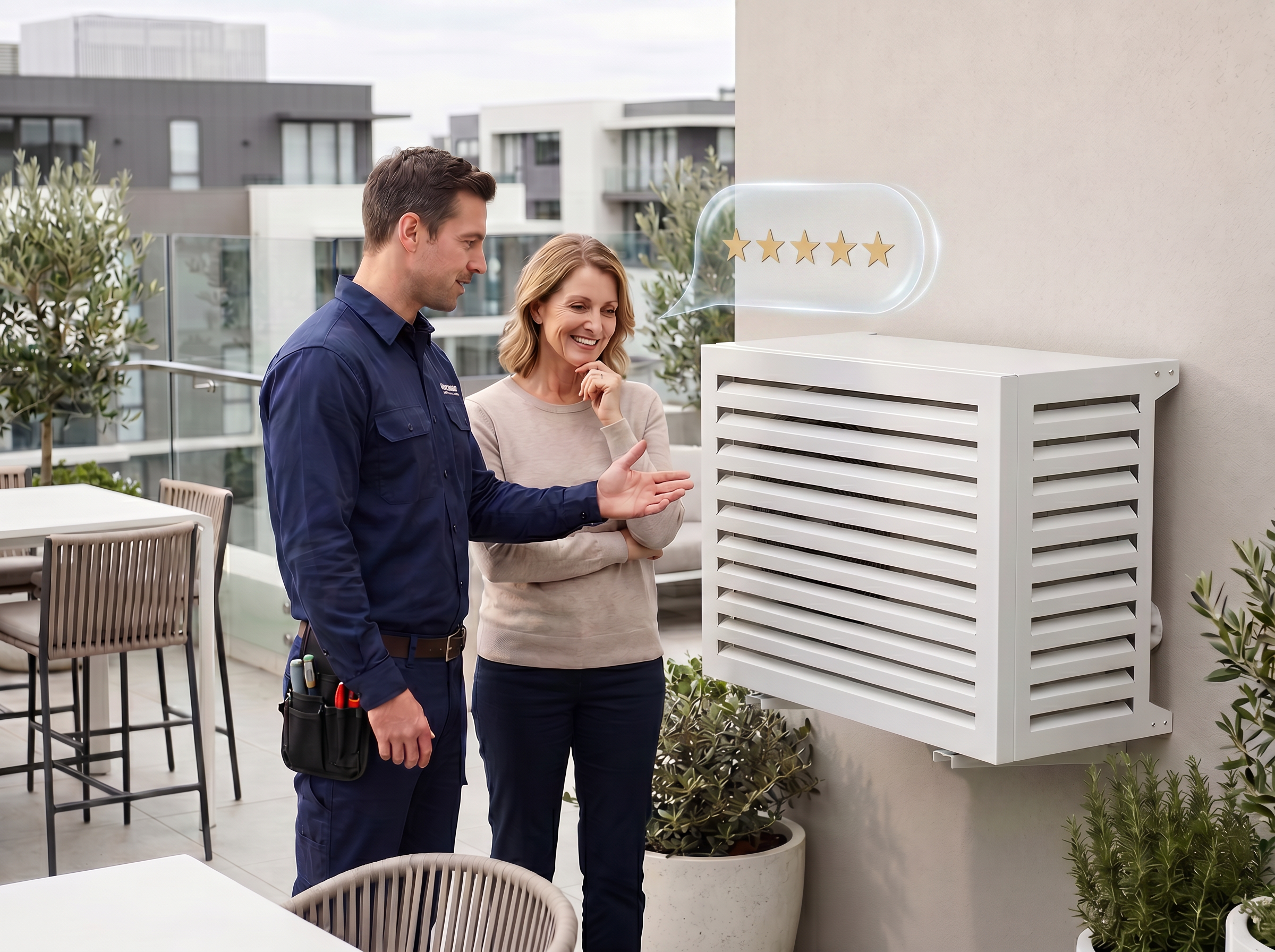
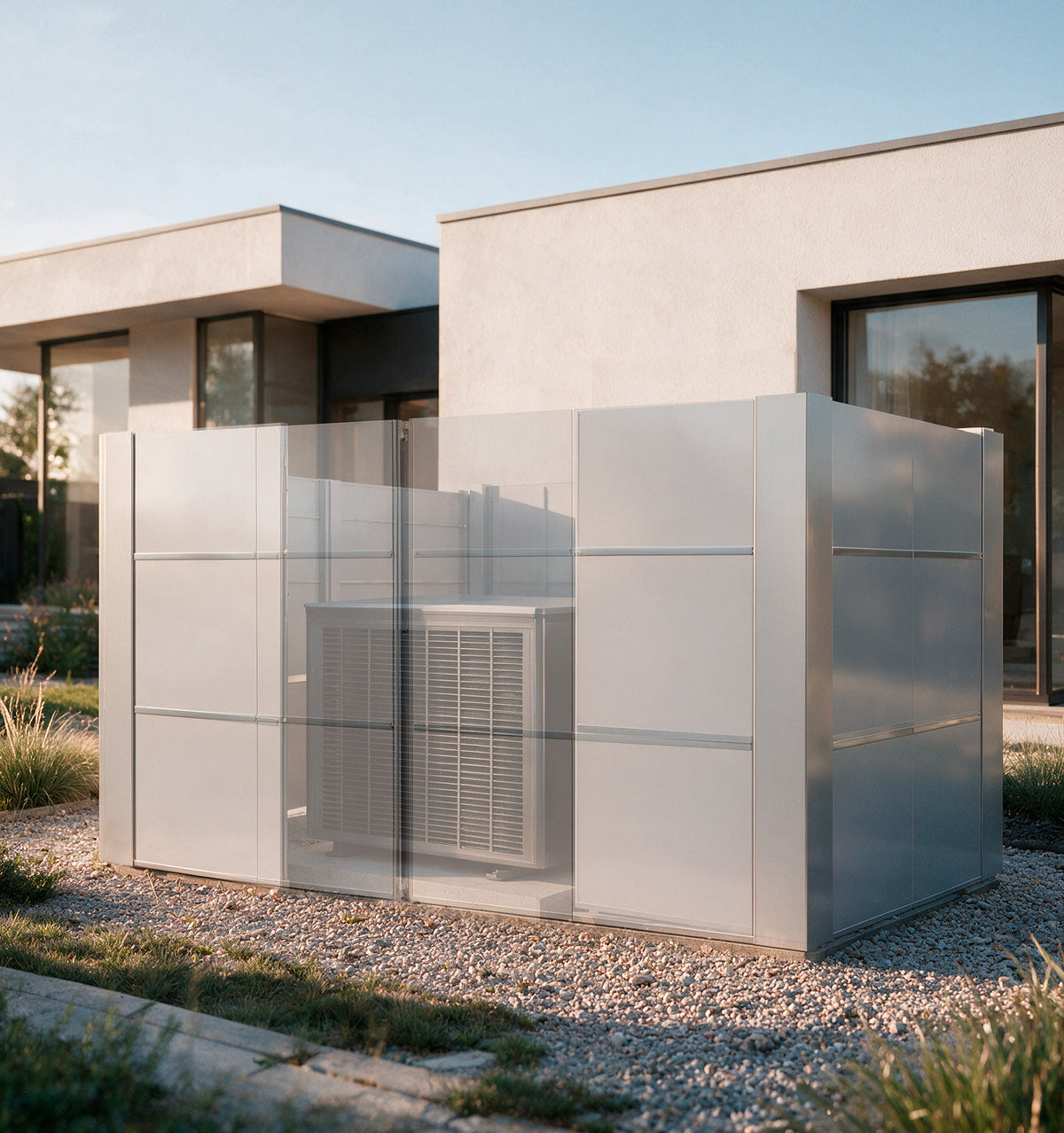
Box Air Klima heat pump covers are designed to help better shield the unit from rain, dirt, direct exposure and aggressive outdoor conditions, while still respecting the principles that really matter in a well-executed installation.
What makes a Box Air Klima solution different in this context?
- engineered ventilation, so the unit can keep working properly;
- correct spacing, so the cover does not become a closed barrier;
- accessibility, to make cleaning and maintenance easier;
- outdoor-suitable materials, such as composite aluminium and stainless-steel hardware;
- adjustable slats, useful for adapting protection more effectively to the unit’s configuration;
- aesthetic integration, to make the installation point look neater and more consistent with the home or hospitality setting.
In other words, Box Air Klima is not designed just to cover the unit. It is designed to offer more sensible protection for the outdoor unit, especially in environments that require extra attention, such as balconies, terraces and gardens near the sea.
6. This also applies to the most common brands and models
Anyone who owns a Daikin Altherma, Mitsubishi Electric Ecodan, Panasonic Aquarea, Vaillant aroTHERM plus, Vaillant aroTHERM pure, LG THERMA V or Samsung EHS tends to ask the same question: if I live near the sea, is my heat pump under more stress?
The correct answer is not “it only depends on the brand”. It mainly depends on the real installation context: exposure to wind, distance from the coast, the unit’s position, maintenance and the quality of the protection chosen.
That is why, when evaluating a cover, it makes more sense to start from the unit configuration and its actual dimensions, rather than just the model name.
Box Air Klima covers for specific models
Looking for a Box Air Klima cover for a specific heat pump?
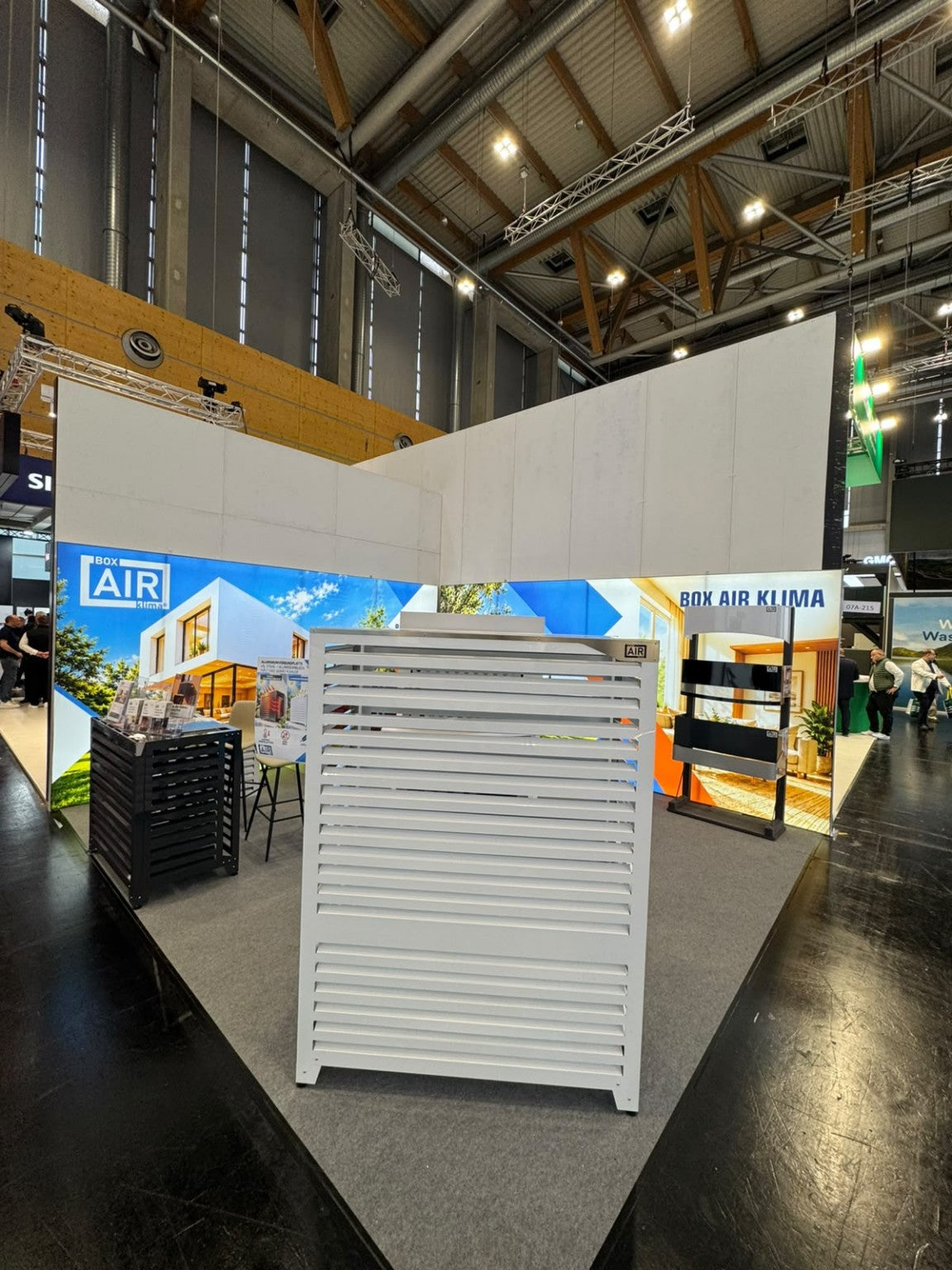
Here is a quick guide to some of the models most commonly searched online. In many cases, the right starting point for these units is the Box Air Klima heat pump cover collection, where you can explore solutions such as Blade, Curve, Provence and Bird: models designed to offer protection, proper ventilation and better visual integration of the outdoor unit, even in exposed settings such as seaside homes, terraces and façades.
Note: this section is meant to help guide the reader quickly towards the most sensible collection to start from. Final compatibility should always be checked on the product page and, where needed, with the actual measurements in hand. If the outdoor unit is very compact and still falls within typical air-conditioner dimensions, in some cases it may also make sense to look at the outdoor air-conditioner cover collection.
When it really makes sense to choose a Box Air Klima cover near the sea
If your heat pump is exposed to salty wind, rain, dirt and the elements, if it is installed in a highly visible position, or if you want to improve the perceived quality of the installation point, then yes: it makes sense to consider a Box Air Klima heat pump cover.
The value of the solution is not only that it covers the unit, but in how it does so: external protection, engineered ventilation, outdoor-suitable materials, easier access for maintenance and a much tidier visual result.
In a coastal context, this means having a solution that is more consistent with the real issue: not simply hiding the outdoor unit, but protecting it and integrating it better into a space where sun, salt air, humidity and the visual quality of the installation all matter together.
On this dedicated Box Air Klima heat pump cover section, you can explore the collection models and start from a practical solution for larger outdoor units, where technical protection and aesthetics need to work together.
Frequently asked questions
FAQ about salt air, corrosion and heat pumps near the sea
Quick answers to the most common questions about marine environments, maintenance, wear and choosing the right cover.
Does a heat pump last less time near the sea?
It can be more exposed to corrosion-related issues than an installation farther from the coast, so it requires more attention. That does not automatically mean it will have a short lifespan, but it does mean the environment is more aggressive and should be managed more carefully.
Does salt air damage the outdoor unit immediately?
No, not necessarily. The key point is the cumulative effect over time: salt deposits, humidity and wind can accelerate wear and corrosion compared with less exposed environments.
Does this only matter if the house is right on the seafront?
No. Even installations that are not directly on the waterfront can still be affected by marine air, especially if they are highly exposed to wind or installed in open positions.
Can rinsing the heat pump with fresh water help?
It can help reduce salt film build-up, but it should only be done in a way that is consistent with the manufacturer’s instructions and without improvising. In coastal areas, routine maintenance remains even more important.
Can a cover help near the sea too?
Yes, it can help, but only if it is properly designed. It needs to shield the unit better without obstructing ventilation, airflow or maintenance access.
Why can a Box Air Klima cover make sense near the sea?
Because it is not designed as a simple decorative screen. Box Air Klima solutions are designed to protect the outdoor unit more effectively without blocking ventilation or access, using outdoor-suitable materials and a design that is more consistent with the real way the unit works.
Can a cover suffocate a heat pump?
A poorly designed cover can, yes. A technical cover designed to work together with the outdoor unit, on the other hand, should allow the system to operate properly.
Which Box Air Klima cover can I consider for Daikin Altherma, Aquarea or Ecodan?
For these product families, in most cases the best starting point is the dedicated Box Air Klima heat pump collection. Final compatibility always depends on the actual measurements, depth and configuration of the unit.
How do I understand which cover to choose for my heat pump?
You need to start from the real measurements, installation position and overall dimensions. The model name helps with orientation, but it is not enough on its own: what really matters is finding a protection solution that is compatible and properly designed.